Lessons from the Sunshine Coast Trail
The pain started when I was going downhill, somewhere on the Sunshine Coast Trail as it wound its way down towards Sliammon Lake. My right knee had felt a little off when I woke that morning, which I chalked up to the calf on that side being a little tight. Anyway, it wasn’t my problem knee. That was the left one, which had given me some trouble in the past. Righty was solid. Or so I thought.
I’d started the trail two days beforehand, making my way from Sarah Point to Manzanita Bluff on the first day, and from Manzanita to Appleton Creek on the second. It was two entire days of problem-free bliss, full of warm days, beautiful forests, and few other people.
As I made my way towards Little Sliammon, I adjusted my gait, tried to lead with my left leg, and eventually stopped to wrap it with an elastic bandage. Nothing helped, and by the time I reached the base of Scout Mountain, it felt like I was being repeatedly stabbed in the knee by a hot knife.
My car wasn’t far away, parked at the Shingle Mill Pub and marina with a resupply inside. Though some kind locals offered me a ride out, I was determined to finish the section. Moving at a snail’s pace and in agony with every downhill step, I gradually made my way out, with the last five kilometres taking me three hours.
I lucked out that day, being so close to civilization. It could have been so much worse, and it changed how I approached the trail the next time.
Planning Exit Points on the Trail
As a solo hiker, safety is always my number one priority. If you’re going solo, it’s more important than ever to carry the ten essentials, leave a trip plan, and carry appropriate gear, even when just out for an hour or two. When I’m backpacking, I also keep a personal locator beacon within hand’s reach.
While daydreaming might sound silly, thinking about what you would do in an injury or emergency scenario helps you to manage anxiety and plan ahead. It came in handy a couple of years back when I slipped on a root and broke my wrist while out on an afternoon hike. What would you do if it happened hours from help, on a remote trail with no service? Are you prepared?
Having buggery knees is not normally something I need to think about, because they don’t bother me on most hikes and backpacking trips. It’s only when I’m going a long distance up or down a mountain carrying weight that it becomes a problem. Since that pretty much sums up the Sunshine Coast Trail, I needed to think about how to approach my next trip.
Keeping in mind that my knee had forced me off the trail the year before, I pre-planned exit points for my second trip. Most of these were places where the trail crossed forest service roads. I also noted them on my trip plan, so that if something happened when I was leaving the trail, people would know where to look for me.
The Return to the Sunshine Coast Trail
Hiking up to Tin Hat felt like a sort of personal hell, endlessly trudging upwards with no end in sight. It had been a fantastic trip so far, with more friendly locals, beautiful scenery, and hardly anyone on the trail. Aside from a few people here and there, I pretty well had the place to myself, which was just the way I liked it.
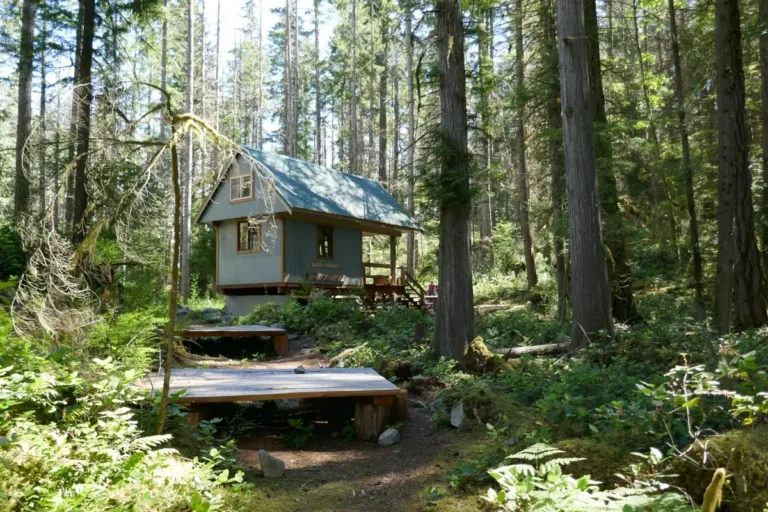
I’d planned out shorter days to start with. The first day, I hiked to Tony’s Point, where I had a lovely conversation with some friendly nudists, and the next day’s destination was Anthony Island, where a dastardly bullfrog kept me up half the night. By day three, I was a little achy, but as I made my way up and over to Fiddlehead Landing, physically, I was feeling good.
It was the following day, on the way up the mountain to Tin Hat, where things went south again. I’d been wearing a knee brace the whole time, but on the climb, to my surprise, Lefty started giving me trouble. Annoyed, I swapped the brace over, but as soon as I did that, Righty started hurting. Out came the elastic bandage again, and by the time I reached the top, I’d already made my mind up to leave the trail.
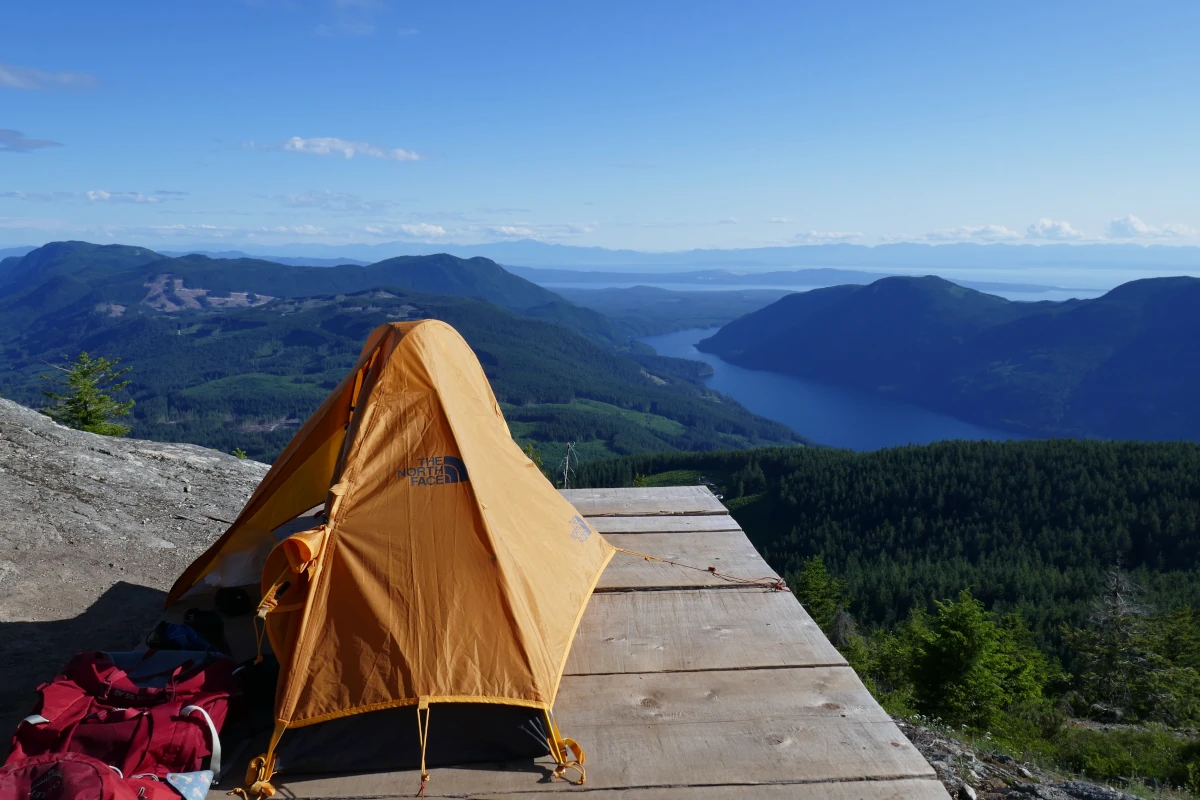
I’m not going to lie, it was dramatic. While I was happy that I’d made it, I was also incredibly sad. I had a prime tent pad spot, right out front, where I could look at the view. Evidently, other hikers thought so, too, because one influencer spent several minutes posing by my tent while her friend photographed her. After they were gone, I sat down, looked at the beautiful view, and cried.
Still, it was the right choice.
The Importance of Being Flexible with Hiking Plans
As a former kayak guide, I well understand the importance of being flexible with plans. We’d always start out with a goal in mind, but depending on the group’s pace, abilities, and the conditions, we’d often modify it on the fly as needed.
One of the top three reasons why people need search and rescue is exceeding one’s abilities. This doesn’t just relate to fitness level, but commitment to reaching the goal as well. Going out for a day hike and deciding that you’re going to reach the summit doesn’t mean that the plan should be set in stone. There might be any number of reasons why the hike isn’t working out, and you can call it quits at any time. Being flexible is important, especially if you have physical limitations.
Though my knees weren’t as bad as the year before, there were several reasons behind making the decision to cut my trip short:
- The next leg of the trip was long, with significant elevation changes, making further injury possible.
- Last year, it took twelve weeks to heal up and ruined my entire summer.
- I currently had cell service atop Tin Hat.
- I likely wouldn’t have cell service for the next leg.
- If I chose to go on and my knees got as bad as last time, I would very likely need search and rescue.
- I didn’t want to put myself in a position where I needed SAR.
So I called the shuttle, paid an incredibly expensive fee, and exited the trail.
Call it a Loss: SCT 2, Cory 0
It wasn’t a complete waste of a trip. By the time I got back down to civilization, I figured that it was the climbing and descent that were the biggest problem for my joints. Since it was fairly flat, I made my way to Fairview Bay, mostly because it was a long weekend and I didn’t want to deal with ferry chaos. I hung out there for an extra day, watching an otter fish in the bay and listening to mice run around my tent all night.
The decision to cut my trip short and self-evacuate from the trail was an important safety lesson. While I lucked out the first time, being so close to my vehicle and all, the second time around, I was deep in the backcountry. The Sunshine Coast Trail is unique in that it has many entry points, which can be used as a safety net.
This also shows me my limits going forward. While I’m a little annoyed that my body apparently can’t handle going up and down mountains with a 25 lb pack on, it might just be that while my brain thinks that it’s still young, my body is unfortunately getting older. Injuries also take longer to heal the older you get, so it’s worth taking steps to prevent them before they happen.
Does that mean I’m finished with my SCT attempts? Absolutely not. I’ll be back to finish the rest one day, bad knees, exit plan, and all.