Saving the Kettle Valley Rail Trail
The Kettle Valley Railway was built, in part, due to a mining boom in the southern regions of the province, and partly to maintain sovereignty. After silver was discovered, the region was flooded with fortune-seeking Americans who utilized the railway in Washington State to bring in supplies.
The railway was constructed over a period of twenty years. Beginning in Midway, it wound through southern British Columbia to Hope, where it connected to the CPR main line. Beginning in the 1960s, the railway slowly stopped being used, and by 1990, there were no more trains.
Though some parts of the railway are now highways, much of it was turned into recreational trails. Now a part of the Trans-Canada Trail, the KVR is multi-use, popular with hikers, motorized vehicles, horses, and bikes.
Like many places in the province, parts of the Kettle Valley Railway fell victim to 2021’s atmospheric river floods. The Othello Tunnel area, a part of Coquihalla Canyon Provincial Park, was severely damaged, with the park finally fully reopening in 2025.
The section of the railway that runs between Princeton and Brookmere was also damaged by the floods, with bridges washed out and parts of the trail falling into the river. Recently, the BC Government announced that it would be decommissioning the damaged section of the trail. This decision has drawn criticism from local trail users and community groups.
Roads are Not Trails
The BC Government’s press release states their intention to decommission a 67-kilometre section of the KVR between Princeton and the Coquihalla Highway. Their reasoning is that repairs and maintenance would cost $60 million, while decommissioning would cost $20 million, some of which would be covered by federal disaster funding. Parts of the press release, however, are vague:
“Repairing the damage and maintaining existing infrastructure…would cost approximately $60 million.” This estimate combines two different costs into one: repair and maintenance. How much do repairs alone actually cost? Was a non-motorized rebuild evaluated? How much would that cost? How many years of maintenance are they talking about? Could partnerships with local groups offset maintenance costs?
“An alternative route is available for people to bypass this section…” The alternative route proposed is a road, which is not a trail. Roads are not generally a safe recreational area for families, cyclists, and equestrians.
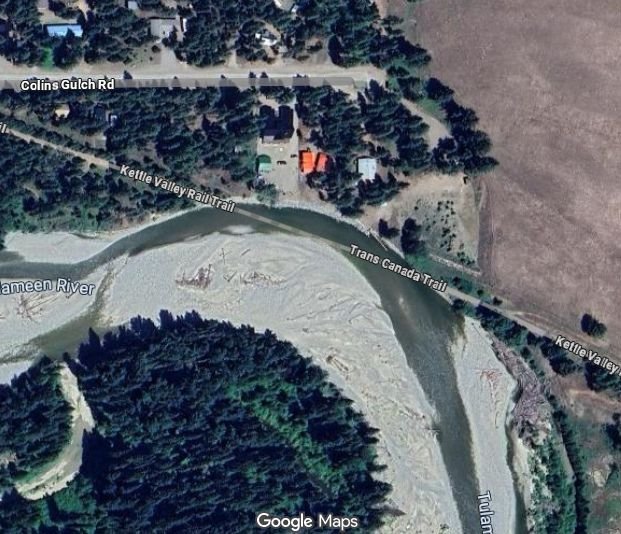
Satellite imagery suggests that large portions of the trail remain physically intact, with damage concentrated in specific spots. Landslides, damaged bridges, unstable slopes, and minor washouts can likely be repaired, but a bigger problem is that parts of the trail are now in the Tulameen River. It’s easy to say that either the trail or the river can be rerouted, but in reality, the solution is much more complex.
Bypassing the areas where the river has claimed the trail corridor means either purchasing private land or obtaining an easement or right-of-way. Reclaiming the trail from the river means environmental permits, fish habitat impacts, engineering, and other studies. There really isn’t an easy solution, but rather than decommissioning the entire trail, targeted rerouting around the most severely impacted sections could preserve the majority of it.
Why Saving the KVR Matters
Outdoor recreation is a part of BC life and culture. Unfortunately, trails rarely generate direct revenue for governments, though they contribute to local economies through tourism. They cost money to build, and even more to maintain. While companies that run trail apps have found a way to make money from trails, none of those profits actually go to those trails.
Building long, multi-use, multi-community, and railway grade trails like the KVR just isn’t possible anymore. The price tag is too high. That’s why maintaining existing trails is so important.
The decision to decommission a KVR section follows the downgrading of a 67-kilometre section of the Columbia & Western Rail Trail. Located between Christina Lake and Castlegar, the trail was downgraded to wilderness status last year, meaning it will no longer be maintained. Things like this have a negative impact on smaller and rural communities, many of which are struggling economically.
Trails are good for tourism, and people need trails. Exercise and spending time in the outdoors are important for people’s health. Most people live in BC because of the outdoor recreation, and that means the more trails, the better.
But who maintains those trails? The provincial government’s RSTBC maintains 475 kilometres of trail. The KVR press release states that the BC government has spent $27 million dollars on trail maintenance since 2017.
As for the rest of BC’s trails, they are maintained by hundreds of recreational groups and nonprofits. In the Fraser Valley, for example, the FVMBA maintains over 500 kilometres of trail. While some nonprofits have the ability to hire staff for some of the work, much of the trail maintenance in the province is done by volunteers.
Decommissioning this section of the KVR is not a solution, especially since most of it appears to be intact and maintainable. Repairs of bridges, slides, and minor washouts can be done for some of the damaged parts, and strategic re-routing around the parts that are in the river can be done for the rest. Maintenance costs can be significantly reduced by giving management to local volunteer organizations.
It isn’t as if the KVR hasn’t been repaired before. Flood-damaged Othello Tunnels and fire-damaged Myra Canyon have both had extensive repairs. With climate-related events becoming more frequent, simply getting rid of trails after damage isn’t a long-term solution.
The Kettle Valley Rail Trail forms a part of the Trans Canada Trail. Preserving as much of the corridor as possible would protect not only a historic railway grade, but a provincial recreation asset that cannot be rebuilt from scratch today.
For information on efforts to save the trail, check out the Save the KVR Facebook group. A petition has also been launched, which you can sign here.
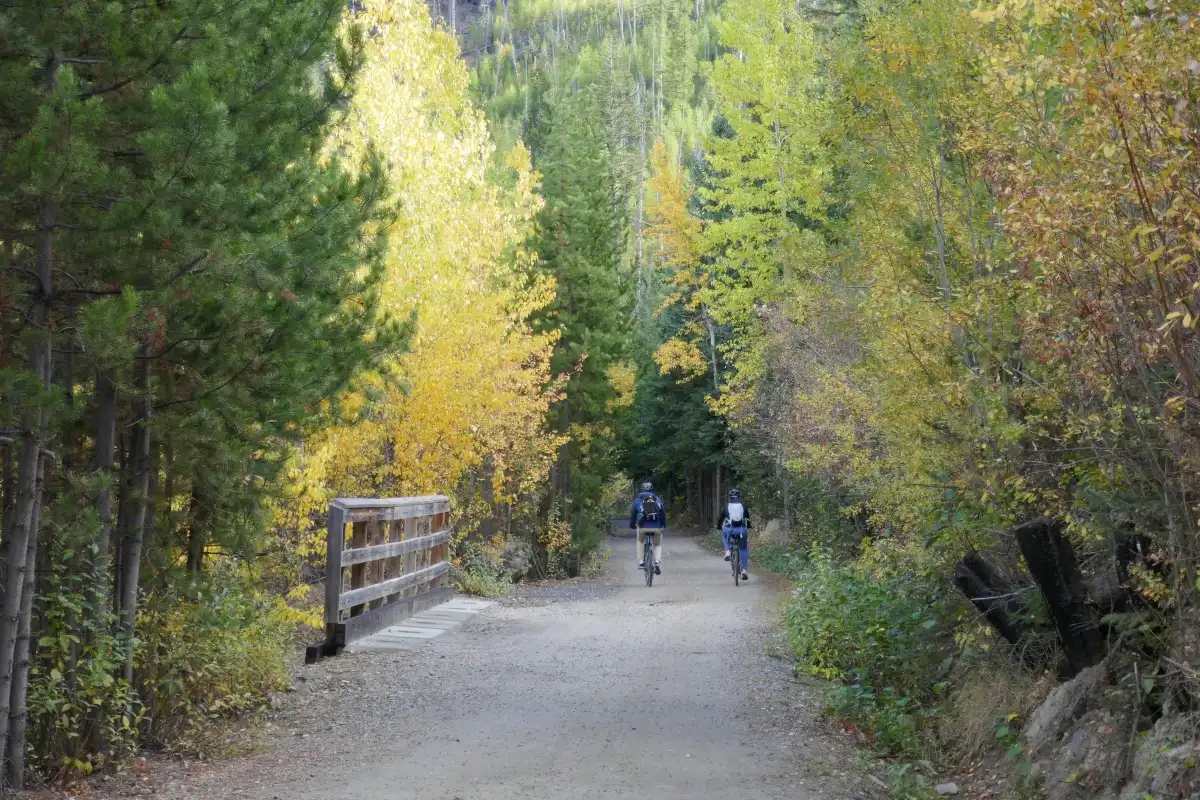
Note: The featured image in this article shows the Kettle Valley Railway in Myra Canyon, near Kelowna.