Creating a Ten Essentials Kit for Hiking in BC
The Ten Essentials are a set of safety gear that are brought along on outdoor activities for use in emergencies. This can range from an accident to getting lost and being in a survival situation to something as simple as a cut or bite.
The Ten Essentials in British Columbia differ a little bit from your typical list. The original list, created by The Mountaineers in the 1930s, includes food and water as separate items and include sun protection. Many lists tailored for BC include food and water as one item, exclude sun protection, and add a signalling device and communication. Other lists include a knife as part of a repair kit and may also include things like bug repellent and waterproof clothing.
The differences are largely due to different needs based on geographical terrain. Someone in coastal British Columbia, for example, has little use of sun protection in a temperate rainforest (though it is needed on snow or on water). In turn, sun protection may be more needed in arid areas of the province, and bug repellent an essential in more northern parts of the province.
This is why it’s important to assemble your own kit, and also why pre-made kits are hard to come by. Creating your own Ten Essentials kit based on your geographical, personal, and trip needs ensures that you’re well-prepared and familiar with the items and their uses.
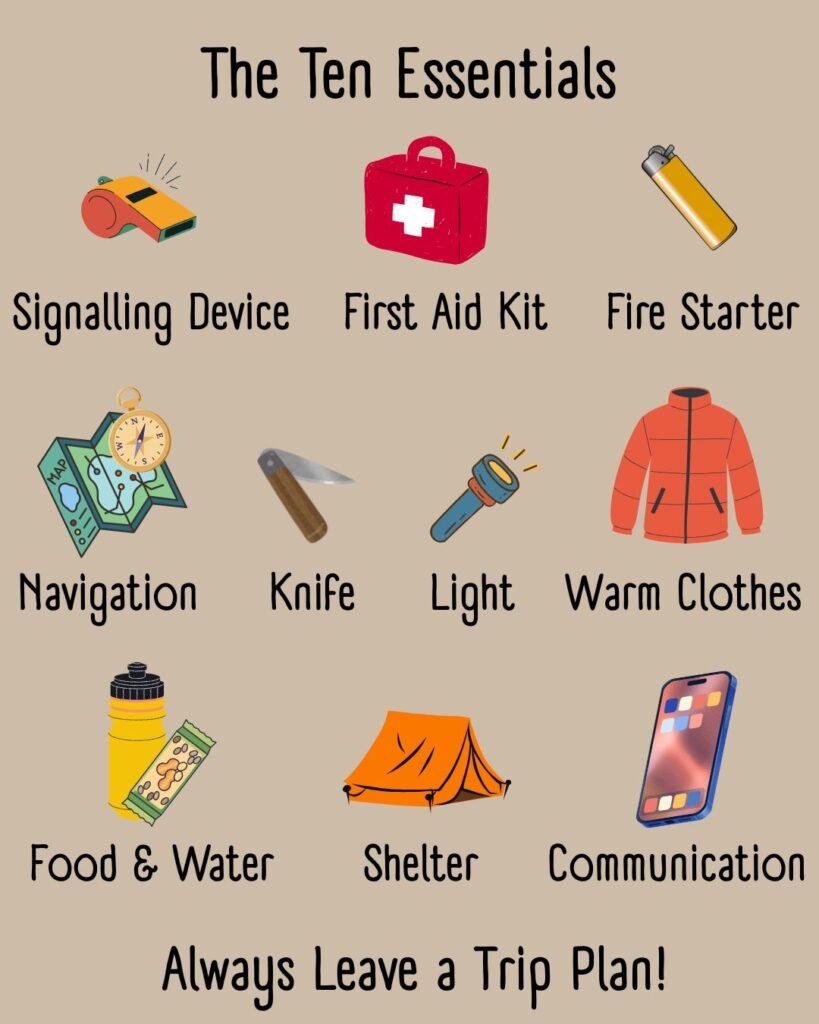
The Ten (Eleven, Twelve) Essentials Checklist
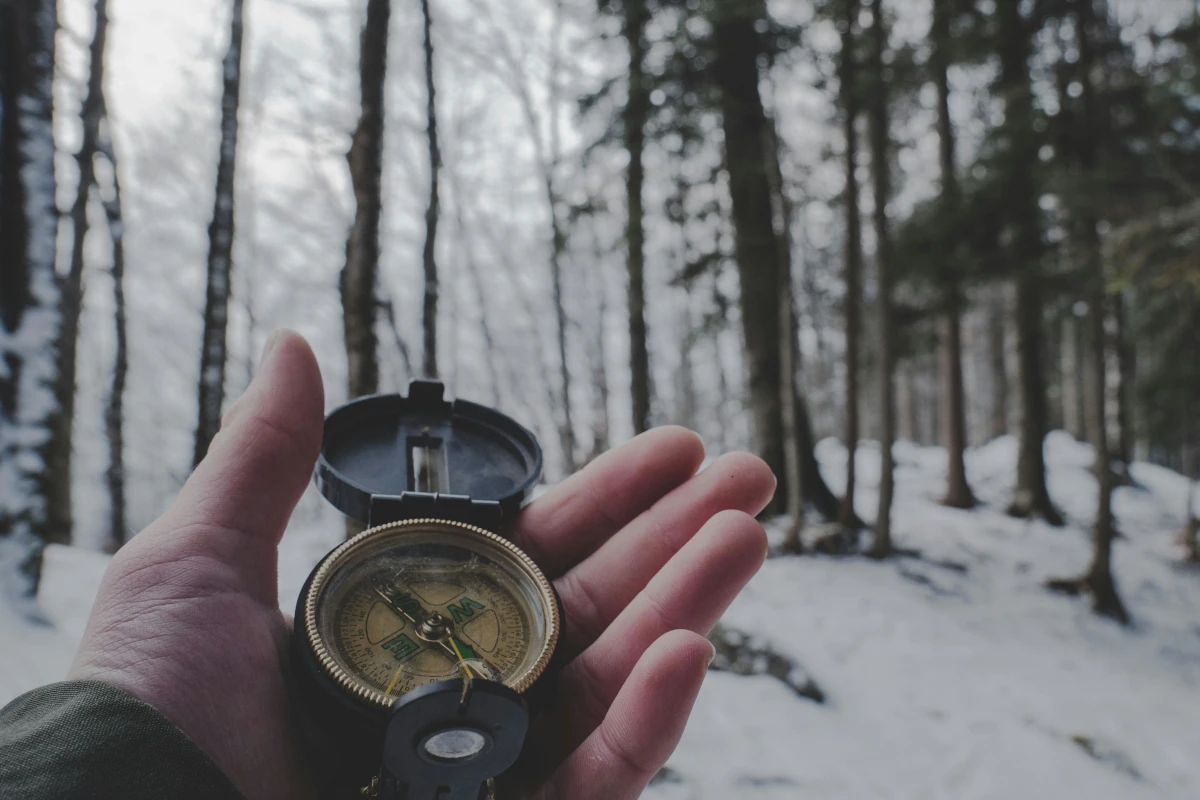
- Navigation (compass, GPS, maps)
- Light (flashlight or headlamp)
- First Aid Kit (commercial kits or self-assembled)
- Knife (pocket knife, fixed-blade with sheath, multi-tool)
- Fire Starter (matches, lighter, fire starting aid)
- Shelter (emergency blanket, small packable tarp, large orange garbage bag)
- Food (small, packable, high-calorie snacks)
- Water (water bottle, and small filtration device or treatment pills)
- Warm Clothes (toque, warm socks, puffy jacket, base layer)
- Signalling Device (whistle, flare, small mirror)
- Communication (cell phone, satellite communicator, personal locator beacon)
- Sun Protection (sunglasses, sun hat, sunscreen)
Tips for Assembling Your Ten Essentials Kit
Most items on the Ten Essentials list can be found at outdoors stores, though it’s worth checking out other retailers that carry seasonal outdoor gear as well. The cost of assembling a kit can range from a few dollars to hundreds of dollars, depending on what you choose to bring along.
Canadian outdoor chain retailers include MEC and Valhalla Pure Outfitters. It’s also worth checking Canadian Tire, Sport Chek, other chain stores, pharmacies, and dollar stores for select items as well.
Navigation
- Map apps, compass & map, or GPS
- These are trip-specific.
- Help you to know where you are going and how to safely return.
- Remember that electronic devices can fail and are not a replacement for on-ground navigational skills.
- Avoid those small button compasses.
Light
- Flashlight or headlamp
- Bring along spare batteries.
- Don’t rely on your cell phone flashlight (you will want to preserve your battery if in trouble).
- Invest in a good-quality, bright LED light.
- Avoid cheap dollar store flashlights that can easily fail.
First Aid Kit
- This can be purchased or self-assembled.
- Items to include: antiseptic wipes, adhesive bandages, butterfly closures, gauze pads of different sizes, nonstick bandages, medical tape, blister treatment, pain relief medication, anti-itch medication, antihistamine, anti-diarrheal medication, medical scissors, tweezers, safety pins, elastic bandage, gloves, splints.
- Consider adding a small mirror in case you need to remove an object from your eye.
Knife
- Pocket knife, fixed-blade knife, or multi-tool
- Blade should be sharp when purchased and kept that way.
- Ensure your multi-tool has a decent-sized blade.
- Fixed-blade knives should be in a durable sheath.
Fire Starter
- Lighter, matches, flammable fire starter
- A simple fire starter is a folded newspaper.
- Commercially-produced fire starters are also available.
- You can also DIY fire starter using recipes found online (wax, dryer lint, sawdust, pine pitch are all commonly used).
- Ensure that matches are kept in a waterproof container.
Shelter
- Emergency blanket, small tarp, large orange garbage bag
- Bright colours help you to be spotted by rescuers.
- There are compact emergency blankets available.
- If using a garbage bag, ensure it’s made of thick, durable plastic.
Food & Water
- Snacks, water bottle, water treatment
- Bring extra food, not just what you’ll need for the day.
- Water treatment options include filtration devices, tablets, liquid, and UV light.
Warm Clothes
- Toque, warm socks, puffy jacket or sweater, base layer
- Base layer is best if wool (will stay warm when wet).
- Wool or wool mix socks are also best.
- If wet weather is expected, also bring along waterproof jacket.
- If your down jacket gets wet, it will not keep you warm.
Signalling Device
- Whistle, flares, small mirror
- Instead of a small mirror, an old CD can also work.
- Check your backpack for a whistle built into the buckle.
Communication
- Cell Phone, satellite communicator, personal locator beacon (PLB)
- Always try calling 911 first, as emergency calls may connect through any available network.
- Satellite communicators usually have a monthly fee for use.
- PLBs in Canada must be registered with the Canadian Beacon Registry, and information must be kept up to date.
- If purchasing a PLB, ensure that it’s programmed for your country.
Sun Protection
- Sunglasses, sun hat, sunscreen
- Can include sunscreen in your first aid kit.
- Polarized sunglasses are best.
- Consider a hat with UV protective fabric.
The Ten Essentials are meant as a safety gear baseline. In British Columbia, where you can be on shorelines or mountains, arid grasslands or forests, your needs will vary depending on the trip. Before you go, check your route, terrain, current conditions, weather forecast, and sunset time, and bring additional gear as needed. Wear good footwear and always leave a Trip Plan. Most of the time, you won’t be in a situation where you need every single bit of gear, but if you get a bad blister or take a wrong turn, you’ll be glad to have your kit along.