The Great Comeback: How Humpback Whales Returned to BC’s Coast
The humpback whale’s breath reeked of dead and rotting fish.
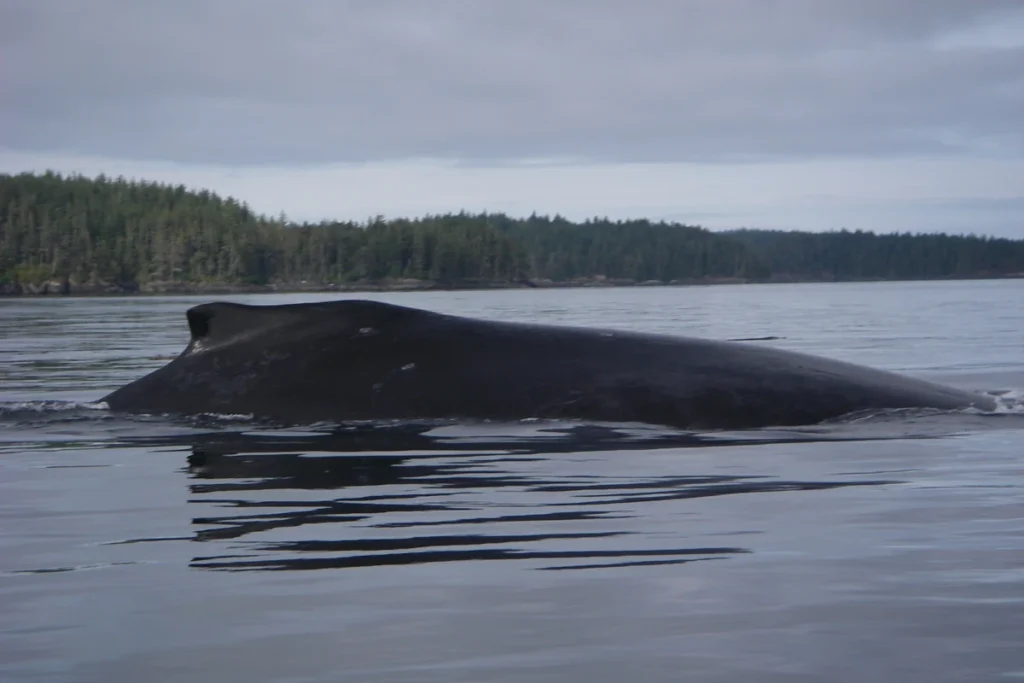
I wasn’t supposed to be that close, and I always taught my clients the same rules when it came to respecting whales. It was the summer of 2006, and I was working as a kayak guide off northern Vancouver Island. It was easy to follow distance guidelines when it came to orcas, but not so much when it came to humpbacks. They didn’t give much of a hoot about little kayaks, changing direction randomly, and surfacing too close despite us keeping our distance.
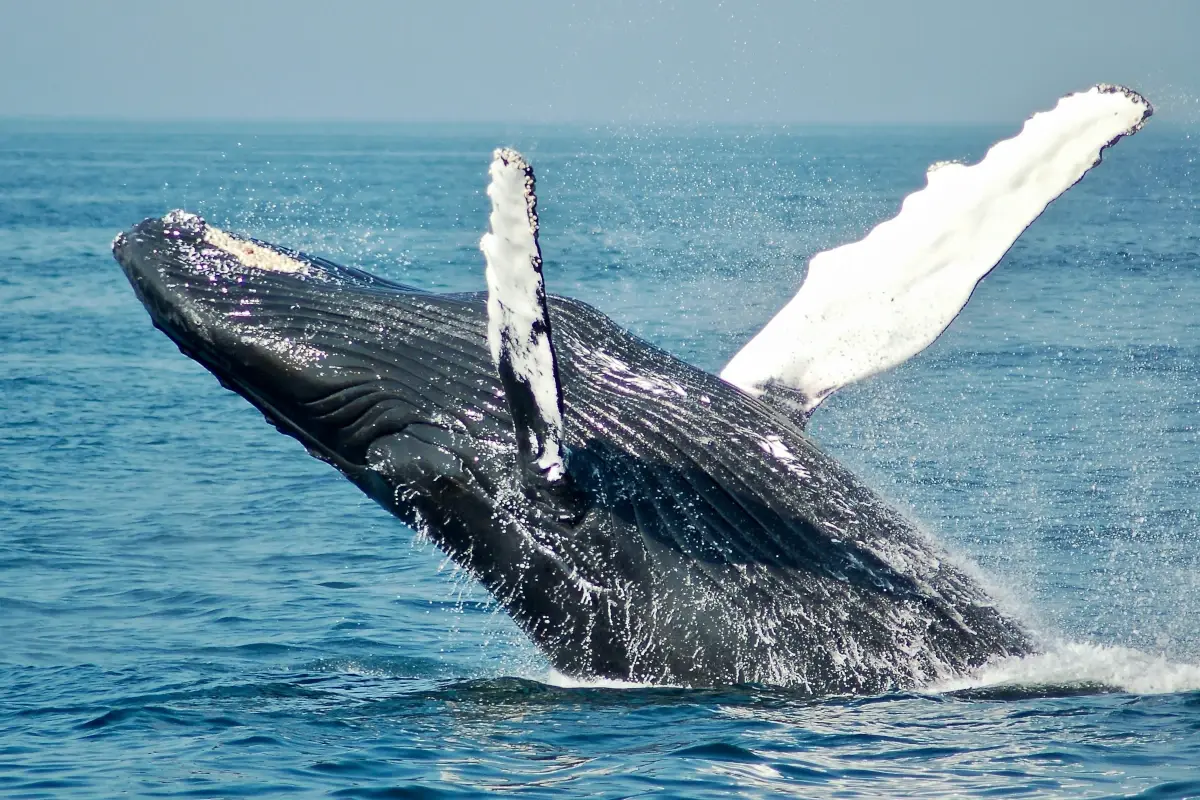
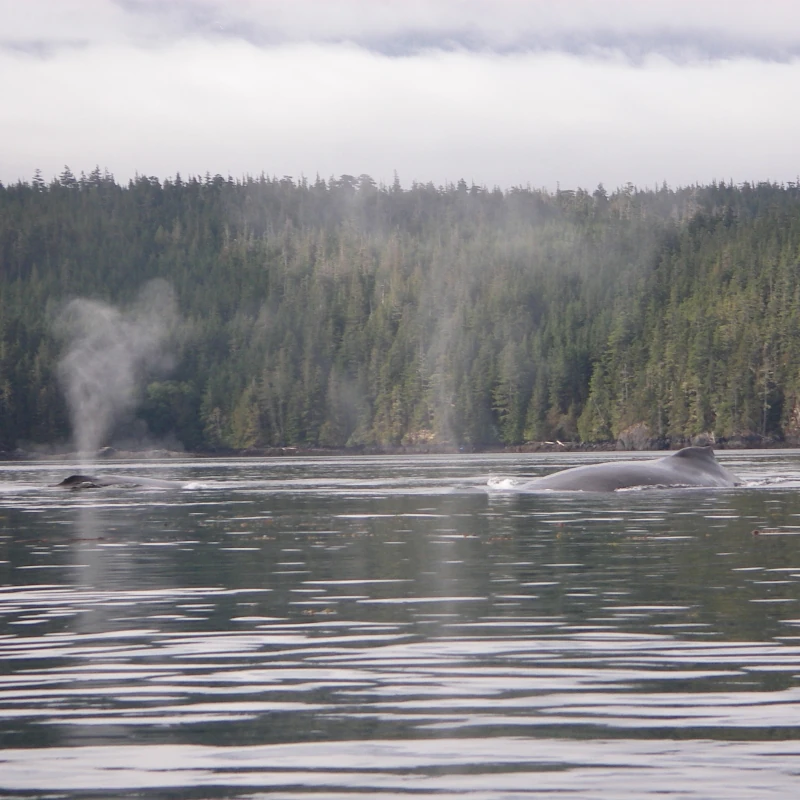
They were everywhere late that summer. It was a glassy September day, and several humpbacks were puffing away out in Blackfish Sound, busily feeding. A windless day was a rarity, so we were content to hang out and watch them from afar. Surfacing with a blow and a cloud of spray, their tails elegantly lifted from the water as they went down for their deep dive.
After learning their tragic, inspiring story, I was touched every time I saw a humpback. You see, once upon a time on our coast, whalers killed them all.
And they came back.
The North Pacific Humpback Whale
Known as gwa’yam to the Kwakwaka’wakw and iihtuup to the Nuu-chah-nulth First Nations, the North Pacific humpback whale has been a seasonal resident of BC’s coast for centuries. They migrate to Hawaii and Mexico for the calving season, and return between spring and late autumn. They can be found from Alaska to California, often returning to the same areas year after year.
Each humpback is identifiable by the underside of its tail flukes, the patterns and markings on which are unique to each whale. They’re given an alphanumeric designation, and sometimes a name, which helps to distinguish each individual more easily.
Quick Humpback Facts:
- Humpbacks are 12-15 m (40-50 ft) long and can weigh up to 40,000 kg (80,000 lbs).
- They can dive up to 600 m and stay under for as long as 30 minutes.
- While population estimates vary, humpbacks can live to be over 50 years old.
- They eat krill and small schooling fish.
- Unique feeding styles include Lunge feeding and Bubble Net feeding.
- They mature at 5-10 years of age.
- They can have 1 calf every 2-3 years, with gestation being 12 months.
- Complex songs are sung by males and can be up to 20 minutes long.
- Every male sings the same song, which changes from year to year.
- Humpbacks, like other whales, have their own barnacle species growing on them.
The Bloody History of Whaling
“They’d grown to trust humans, and then they up and get shot by a human. It just never seemed right to me.”
—Bill Proctor, from Listening to Whales by Alexandra Morton
The tale of the great whale slaughter is memorialized in some BC place names: Blubber Bay, Whaletown, Whaling Station Bay, and Cachalot. While there is no reliable estimate of the historic North Pacific humpback whale prior to commercial whaling, an estimated 30,000 North Pacific humpbacks were killed between the 1800s and 1967, reducing the population to just 1200-1600 individuals.
Quick Commercial Whaling Facts:
- Commercially, whales were hunted primarily for their oil, baleen, and meat.
- Blubber and spermaceti (from sperm whales) were rendered into oil, which was used for a number of products.
- Baleen was commonly used for corset boning and other accessories.
- Both have since been replaced by petroleum products (oil and plastic).
- Whales were commonly hunted using explosive-tipped harpoons.
- Death was not always instantaneous, with many whales taking over an hour to die.
Humpbacks were protected in the North Pacific in 1966. At that time, it’s estimated that fewer than 10 percent of the historical population remained. Canada stopped all commercial whaling in 1972, and a worldwide moratorium came into place in 1985.
In BC, the lonely inlets and bays that once fed whales were devoid of them, but over time, slowly but surely, as the population recovered, the humpbacks began making their way back home.
The Great BC Humpback Comeback
In her book Listening to Whales, biologist Alexandra Morton recounts a conversation about humpbacks with Bill Proctor, a well-known Echo Bay old-timer. Proctor indicated that there was once a handful of whales local to the Broughton Archipelago, and that a woman who hated them had reported them to a whaling station at Coal Harbour. He recalls watching the whaling boat towing out the dead humpbacks, the last of the archipelago whales, ones that people were fond of and had named. After that, there were no more humpbacks.
I heard this story when I arrived in the area as a kayak guide in 2005. Back then, humpbacks had just begun returning to their ancestral waters along BC’s coast. More were being seen each year, much to the excitement of the local biologists and whale watchers.
One of the first whales to return to the north end of the island was Houdini, said to be named so because she was adept at giving whale watching boats the slip on her deep dives. Farther south, in the Salish Sea, a humpback named Big Mama was the first to return in 1997, after 30 years of humpbacks being absent. Over the years, both whales had calves that they brought along, and in turn, those calves did the same.
Today, humpbacks are regularly seen in the Salish Sea, sometimes even giving those on BC Ferries a show. Though their presence is a good sign that the marine ecosystem is healthy enough to support them, there is still much work to be done to ensure that the humpback’s comeback story is a permanent one.
New Threats: Entanglements and Ship Strikes
Years ago, when I was studying coastal ecology in Prince Rupert, a dead humpback whale surfaced in the area, and we students were invited to attend the necropsy. Even now, almost twenty years later, the memory of the stench of that rotting whale turns my stomach. I didn’t do much more than take photos and retch, but I remember when the DFO biologists discovered her cracked skull. A vessel strike had killed her, perhaps one of the large freighters in the harbour.
Ship strikes, along with entanglements and marine ecosystem changes, are one of the biggest threats to humpback whales today. One might recall Moon, the young female humpback who was sighted in 2022 with a crooked spine and paralysis from a vessel strike. Unable to use her tail flukes, she nonetheless made the migration to Hawaii with her pectoral fins before perishing.
There have been a number of vessel strikes and entanglements making the news in BC over the past few months, and indeed over the past few years. This is happening up and down the Pacific Coast. U.S. data from 2024 shows that humpbacks make up the majority of entanglement incidents.
September:
- Tutu, a young humpback, is disentangled from fishing gear near Port McNeill.
- Midnight is found deceased in Wright Sound following a strike by the BC Ferries vessel Northern Adventure.
- Fader is disentangled from fishing gear off Nanaimo.
October:
- Skipper, a young humpback, is struck by a Hullo Ferries vessel near Vancouver and later seen with a gash in its back.
- Astroboy is disentangled from rope near Nanaimo.
- Wisp is found deceased off Keats Island following a Prince of Whales vessel strike in the same area.
November:
- Polyphemus, a young male humpback, is found dead off Lasqueti Island.
- Upon the writing of this article, an entangled humpback was sighted near Ladysmith, and another entangled in fishing gear was beached in Oregon, USA. (Update: The entangled whale, Eugenia, was freed, while the Oregon whale was euthanized.)
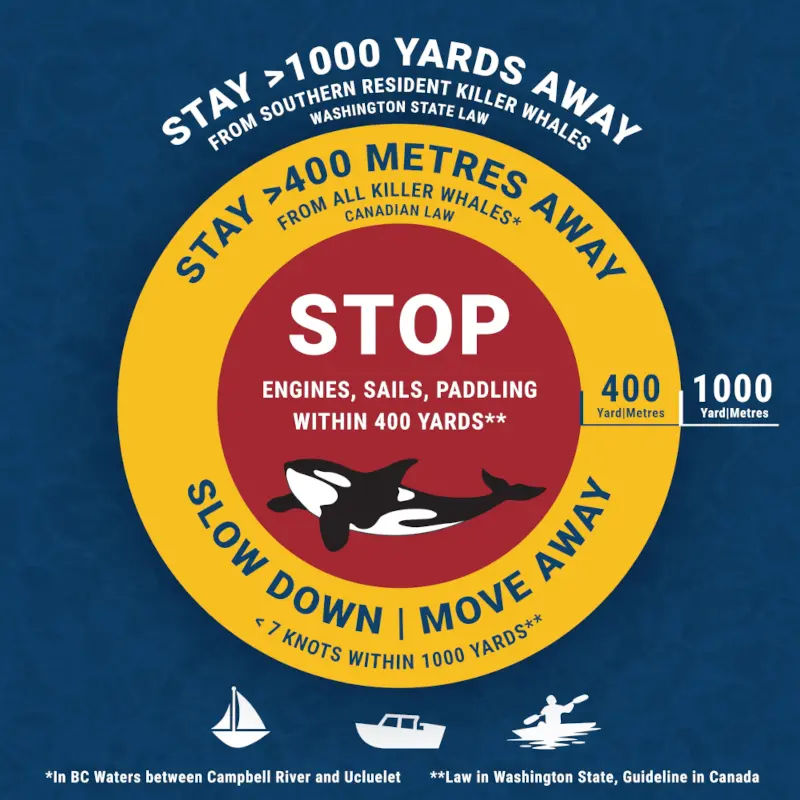
It can be difficult to predict where a humpback might surface next, as I well know from my own encounters with them. They lack the same awareness of surroundings as other whales, and the unpredictability of their movements can make it difficult to steer clear, even if someone is following all the regulations and guidelines. Nobody wants to hit a whale. Nonetheless, practicing safe boating guidelines can help.
Vessel Strikes Quick Facts:
- High-impact collisions can cause catastrophic internal damage.
- Boat propellers can cut into a whale’s flesh, causing them to bleed out or die from infection.
- Death can be prolonged and leave a whale maimed, suffering, and starving.
Entanglements Quick Facts:
- Both active gear and “ghost gear” (discarded and abandoned) cause problems for whales.
- 50% of BC’s humpbacks have scarring from fishing gear entanglements.
- Entanglements can impede a whale’s movements and ability to feed, leading to disability, amputation, starvation, infection, and drowning.
Another growing concern for humpbacks and other sea life is changes to the marine ecosystem. Between 2014 and 2016, a marine heatwave known as “the blob” caused the North Pacific humpback population to decline by nearly 20 percent. Marine heatwaves can harm food sources, leading to emaciation and starvation.
The humpback comeback story isn’t over yet. That they’ve returned to the coast where they were historically killed feels like an act of trust, even if it’s just simple biology. In the past, humans caused their deaths intentionally, but this time around, it’s the unintentional that’s doing harm.
In just a few decades, going from no whales to many whales shines as a beacon of hope. Research, education, and change can help to ensure that the humpback’s magnificent success story continues. We can do better.
How You Can Help
- Follow Be Whale Wise guidelines when boating.
- Slow down and be vigilant in known whale areas.
- Take the Whale Safe Boating Course online for free.
- Report entangled or injured whales.
- Support organizations working to protect marine ecosystems.
- Use whale safe fishing gear.
- Choose sustainable seafood to reduce ghost gear and bycatch.
Donate to Help BC’s Whales
- North Coast Cetacean Society
- Marine Education and Research Society
- Cetus Research & Conservation Society
- Raincoast Conservation Foundation
- Ocean Wise
- Georgia Strait Alliance
- Coastal Restoration Society
- Living Oceans Society
- Pacific Wild
- Telegraph Cove Whale Interpretive Centre
If you enjoy learning about BC’s wildlife, check out our story on how British Columbians often end up caring for accidental winter “pet” hummingbirds, and how to help them safely.