Oil Spill Response in BC: Lessons from Robson Bight
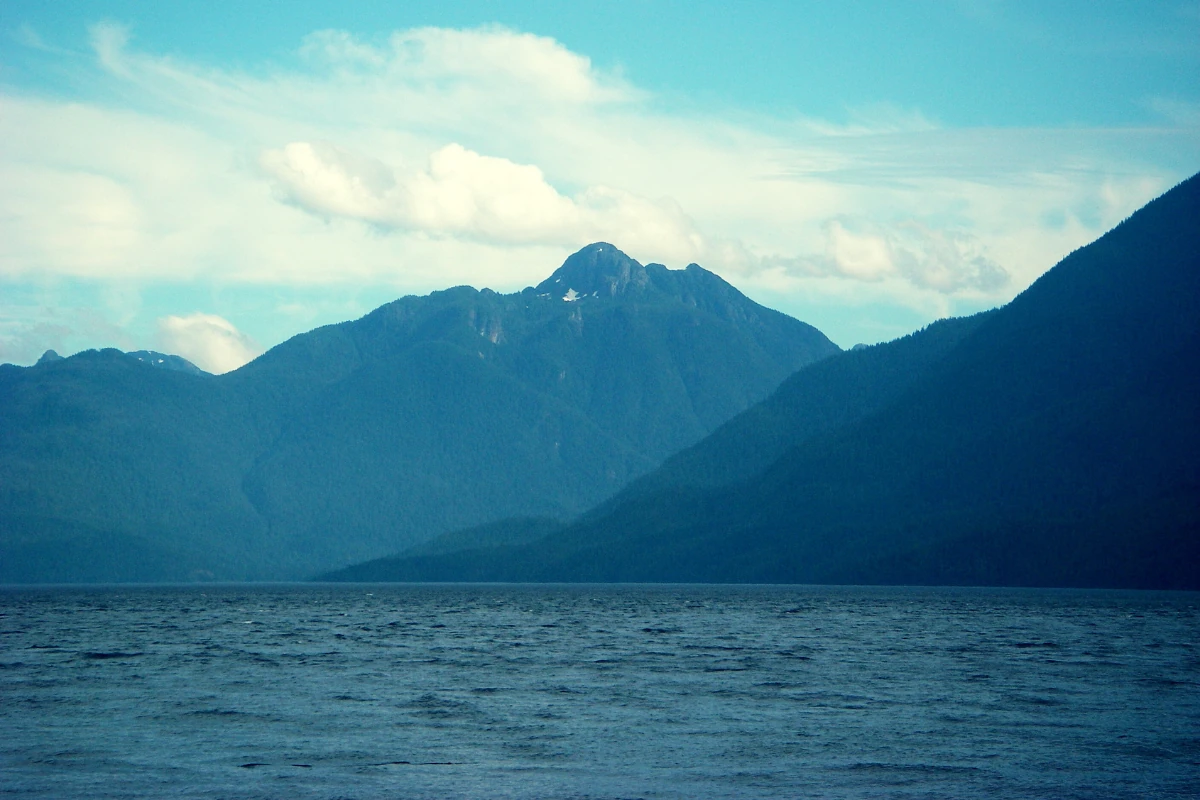
There is always chatter on the VHF radio up at the top of Johnstone Strait, off the northeast tip of Vancouver Island. The whale watching community in the area is a tight-knit one. If ever there was a whole lot of talk on the radio, it was a good indication that something was up.
It was that uptick in radio chatter that first tipped me off that something terrible had happened. It was August 20, 2007, and a barge had overturned, dumping logging equipment into Robson Bight. Two hundred litres of diesel had leaked into the water, creating a two-kilometre-long slick on the surface of the strait.
I was leading a kayak trip in the area at the time. Cracroft Point was the base camp for our four-day trips and an excellent viewpoint to watch whales coming down Blackney Pass. On that day, we’d paddled around the point and down the shore of West Cracroft Island to Growler Cove and the Sophia Islands, a journey that included a view of Robson Bight, across the strait.
We couldn’t see much, but the air reeked of diesel.
A Reserve Only For Whales
When the salmon start coming back to their rivers to spawn, Johnstone Strait forms a sort of funnel. This makes it a prime foraging ground for the Northern Resident orcas, whose diet consists solely of salmon. The orcas usually arrive in the area in June and stay through the autumn, following their food source up and down the strait.
Rubbing their bellies on pebbled beaches is a behaviour unique to the Northern Residents. One such place where they engage in this activity is Robson Bight, a small bay on the northeast coast of Vancouver Island, where the Tsitika River empties into the strait.
Protected in 1982, the Robson Bight Ecological Reserve is the only reserve in the world just for wildlife—humans are not allowed access. To enforce this, the Robson Bight warden program patrols the area, ensuring that boats stay outside the boundary and others do not attempt to land on the beaches there.
It was, quite literally, the worst place on the entire coast to have a spill.
A Barge, A Bight, and a Bad Day
While commercial vessels are not allowed in Robson Bight, whose boundary extends one kilometre offshore, for safety and navigational reasons, sometimes boats do enter the bight. On that day, a tug was pulling a barge carrying logging equipment when the barge began taking on water. Ultimately, it capsized, sending eleven pieces of logging equipment, including a grapple yarder, two log loaders, a bulldozer, an excavator, an ambulance, a bus, a pickup truck, and a tanker full of 10,000 litres of diesel into the ocean.
The incident was caught on one of the many hydrophones (underwater microphones) in the area used to study orca language. Later, it was discovered that there was a defect in the hull of the barge that caused it to take on water, but at the time, all anyone knew was that there was now machinery sitting 350 metres beneath the whale reserve, and it was leaking oil.
In British Columbia, oil spill cleanups are the responsibility of the polluter. In this case, it was Ted LeRoy Trucking, a contractor for the logging company TimberWest. Though there were booms in nearby communities that could have been deployed, the offer was declined.
Instead, Burrard Cleanup out of Burnaby, BC, was hired for the job. By the time their vessel and equipment arrived on scene, some eighteen hours later, some of the Northern Resident orcas had already swum through the diesel multiple times. On water, diesel forms an ultra-thin sheen that booms and skimmer can’t capture. The slick was now 14 kilometres long and impossible to clean up.
Though it was well known that oil can kill orcas—twenty-two of them had died in the Exxon Valdez spill of 1989—the effects of diesel fuel were unknown. The main concern from scientists was inhalation of the fumes, which could cause lung irritation. Getting it in the eyes and mouths, too, could cause lesions. Since whales don’t have a sense of smell, they had no way to detect the slick at all. And since humans can’t see beneath the water, nobody had any idea what effect it was having on the underwater ecosystem.
We watched the A30s come through Blackney Pass the evening after the spill, on their way to or from swimming through the diesel. Though some of the whale watching companies wanted to try to herd them away from it, the request was not approved.
In the end, the whales, thankfully, seemed to have been largely unharmed, but that wasn’t the case for the local bird life.
The Dead Birds
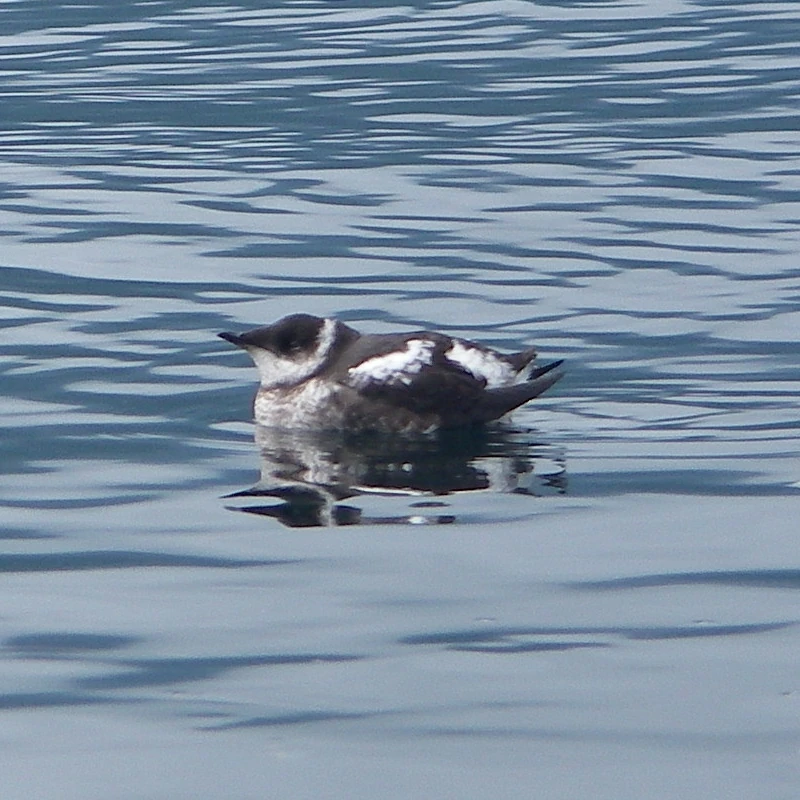
For weeks after the spill, we found dead sea birds floating in the water. Though there were just a handful of them, it still stuck out as unusual, because up until then, the only birds we’d ever seen were healthy, active, thriving ones. Suddenly, though, we would find the odd dead bird while out paddling for the day. I wanted to collect them and send them off to prove they were linked to the spill.
To collect specimens for testing, we were told they would have to be placed in a paper bag and kept refrigerated. Aside from the problem of putting a sopping wet carcass in a paper bag, we didn’t have any paper bags, nor did we have refrigeration while kayak camping. So we couldn’t collect them, and in turn couldn’t link them definitively to the spill.
But the next year, there were no dead birds anymore.
Years later, when I worked at a wildlife rehabilitation centre, we occasionally received oil-covered birds. Usually, they’d just gotten into something or other, in one case, an unsecured canola oil disposal at the back of a restaurant. Oiled birds always had a very high death rate. While it’s true that rehabbers use Dawn dish soap to remove the oil from feathers, by then it’s usually too late. If the bird had ingested or inhaled even a little bit of the stuff, it would almost always die.
Aftermath
An estimated 200 litres of diesel had spilled during the accident, which ultimately evaporated or dissipated. Unfortunately, there was still the matter of the fuel truck sitting at the bottom of Robson Bight, filled with another 10,000 litres. This didn’t sit well with the community, whose livelihoods were dependent on a healthy environment and wildlife population.
Officials who ran the numbers decided that the pressure at 350 metres depth had imploded the fuel tanks on the way down, a declaration that wasn’t good enough for local conservationists. After they fundraised $40,000 to send down a submersible to check, officials suddenly changed their tune and announced that they would send one down themselves.
In December of 2007, that footage showed that the vehicles, including the fuel truck, were intact on the ocean floor. By the following spring, there were plans underway to raise the equipment, with the cost split between the provincial and federal governments. Even so, it wasn’t until May of 2009 that a cube of hydraulic oil and the diesel truck were finally removed from the bottom of the whale reserve.
Meanwhile, six pollution charges had been laid against Ted LeRoy Trucking, but they declared bankruptcy in late 2007. Though they were found responsible for the accident in Provincial Court in 2012 and fined $75,000, it was taxpayers who ultimately footed the $2.5 million cleanup bill.
Accidents Do Happen: Oil Spill Response and the Cleanup Myth
Even today, if you dig into some of the Alaskan beaches affected by the 1989 Exxon Valdez oil spill, you will find oil beneath the substrate. Those of us who remember the catastrophe are marked with the knowledge that even one accident with oil is one too many. Despite what the experts say, the reality is that you can’t clean it up. You can only respond effectively.
In the case of the Robson Bight spill, though there were booms nearby that could have been deployed sooner, the company hired to do the cleanup didn’t arrive until the next day. In the grand scheme of things coast-wise, Robson Bight isn’t even terribly remote. The system only works if a response contractor is nearby and able to deploy immediately.
Though the Canadian Coast Guard does have equipment strategically cached up and down the coast, the reality is that the first people on scene to any disaster in the remote reaches of British Columbia’s coast are going to be those who live there. When the BC Ferries vessel The Queen of the North sank in Wright Sound in 2006, it was locals from Hartley Bay who were first on scene.
The vast majority of the coast has no road access, no nearby ports, and no local crews trained to deploy cleanup equipment. Even in the best-case scenario, with equipment strategically placed in remote areas with trained crews nearby to deploy them, much of the year the weather simply does not allow a safe response.
Make no mistake: the coast is a wild and unforgiving place. There is a reason why it’s largely uninhabited. Even in decent weather, high winds, strong currents, and swell can make deploying booms or operating skimmers impossible. Geography can also work against responders: narrow channels, rocks, and exposure to the brunt of the open ocean limit what any vessel can realistically do.
When you combine distance, weather, geography, and the legal reality that a polluter can simply go bankrupt, what emerges is a hard truth: despite what plans and protocols promise, there isn’t any way to adequately respond to a major oil spill on BC’s coast.
“We walk our beaches, but instead of gathering life, we gather death. Dead birds. Dead otters. Dead seaweed.”
—Chief Meganack, Port Graham, Alaska, from In the Wake of the Exxon Valdez by Art Davidson
The Johnstone Strait area is also home to humpback whales. Read their remarkable comeback story.