Coastal British Columbians and their Accidental Pet Hummingbirds
If you live on the South Coast of BC, you might decide to put out a hummingbird feeder in the summer. This might be just a whim, an innocent gesture to watch these delightful little birds zip hither and thither, dainty and adorable, but also surprisingly vicious. These guys can be very territorial, often guarding a feeder for themselves and chasing off any others who might try for a sip.
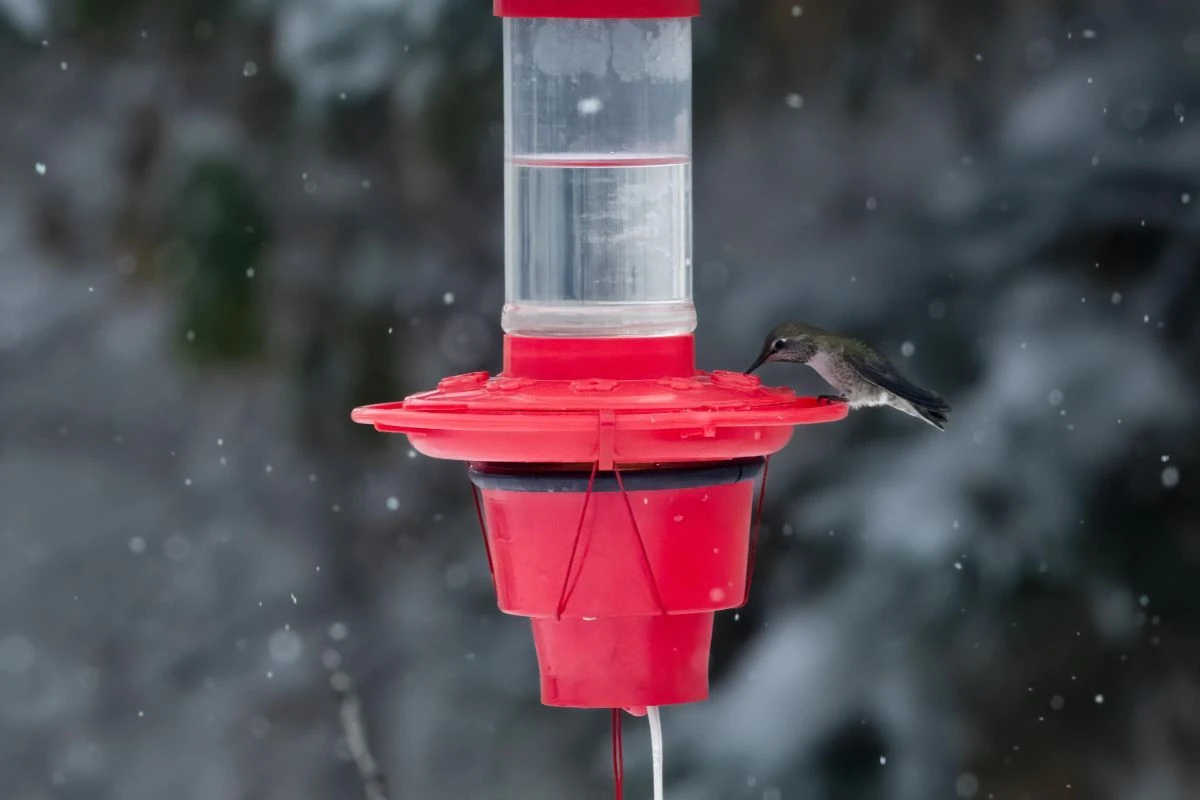
The two most common species of hummingbird in BC are the Anna’s Hummingbird and the Rufous Hummingbird. The Rufous are migratory and only come up for the summer months, but the Anna’s will occupy a small corner of southwestern British Columbia year-round. This is why, if you put out a feeder in summer, you might suddenly find yourself having accidentally adopted a pet hummingbird through the winter. And what a challenge it can be.
Cold Snaps and Emergency Nectar Duty
The warmest corner of the province is not immune to the odd cold snap. Called an Arctic Outflow, these winds can bring temperatures as low as -20 C. This phenomenon usually happens once or twice a winter for a week or so at a time, and during this time, feeding your little hummer suddenly becomes a matter of life and death for the little fellas. Nectar freezes at -2 to -3 Celsius. When exposed to outflow winds, hummingbird feeders can freeze up in as little as a few minutes.
This has prompted many British Columbians to get creative in keeping their feeders thawed and their pet hummers alive. Social media is filled with people and “their” hummingbirds, as well as the contraptions they’ve created to keep the nectar flowing.
Those who don’t want to shell out the money for a feeder heater get creative, flexing their MacGyver skills to find all kinds of ways to keep the nectar flowing. People can get quite inventive, utilizing household items, including but not limited to:
- Bubble wrap
- Hand warmers
- Christmas lights
- Heat lamps
- Work lights
- Wax warmers
- Socks
- Pop cans
- Soup cans
- Night lights
Some even construct little boxes for the feeder to hang in out of the wind.
Others simply rotate multiple feeders. From dawn until dusk, feeders are rotated in and out, then brought in at night and put out again just before dawn. Hummingbirds go into a state of torpor at night, similar to hibernation, and when they wake again, they need to feed. This means getting up in the early hours to make sure the feeder is out and ready when your little guy wakes up for the day.
Note: If you are rigging up your own heating device for your feeder, modern LED bulbs do not give off heat. Use only older style bulbs that give off heat and be mindful of fire hazards when using them.
Where do they go in January?
Many people report that their little hummers disappear early in the new year. This is completely normal. Anna’s Hummingbirds are early nesters, starting as early as December, and continuing through June.
Their clutch size is just two eggs, and their nests are no wider than a two-dollar coin. After nesting season, you might spot them again in the garden in July, sipping on bright flowers and chasing off competitors.
Hummingbird Care Guidelines:
If you choose to put out a feeder, please do so responsibly. Their health depends on it.
Use the proper nectar mixture:
- Mix 1 part sugar to 4 parts water (1/4 cup of sugar to 1 cup of water).
- Ensure that the sugar is fully dissolved in boiled water.
- Don’t add anything to the nectar (ie. food dye, honey, etc).
- Make sure nectar mixture is cooled before filling the feeder.
Don’t change the nectar ratio during cold snaps:
- Use 1:4 ratio of white sugar and water only.
Clean feeders often:
- Empty and clean feeders every 3 days.
- Ensure it’s rinsed properly and no soap or other residue remains.
- Dirty feeders kill hummingbirds through mold and disease.
If you don’t feel that you’ll be able to clean your feeder regularly, especially during the summer, it’s best not to put one out at all. Sometimes humans can do harm, even with good intentions. We all love our little feathered friends, and if we follow best practices to keep them safe, they’ll continue to delight year after year.