The Unspoken Rules of Mushroom Foraging in BC
My trail of choice isn’t necessarily my favourite, but it’s pretty, quiet, and convenient, shared only with a couple of other regulars and the birds and squirrels. Unless, of course, it’s New Year’s resolution season or mushroom foraging season. In the autumn, this area is a favourite of mushroom pickers.
I took up mushroom foraging myself this year. Not long after the first good rain in August, I found a nice patch of Golden Chanterelles not far off-trail, and a stunningly beautiful crop of Chicken of the Woods growing out of a log on another little-travelled trail. I chose my mushrooms carefully, making sure to leave some behind, gathering only enough to dehydrate for next year’s DIY backpacking meals.
It was only after the autumn rains set in for good, long after I’d finished foraging myself, that the mushroom hunters showed up. Suddenly, my peaceful little trail was dotted with groups of people tramping around off-trail, carrying out large bags. Someone had come along and chopped off all of my beautiful Chicken of the Woods. Many whimsical little mushrooms of various species that had cropped up along the trail had been pulled out and discarded, leaving the trail scattered with dead fungi.
I wasn’t mad, just…disappointed. I was always taught never to take all of something, especially in the woods. It got me wondering whether some foragers had simply never been taught those same unspoken rules, or if the rush to pick had begun to overshadow respect for the woods.
The Rise of Mushroom Foraging
Mushroom foraging in BC is largely unregulated. Even the BC Government’s official page is fairly basic information-wise. Many foragers are harvesting for profit, meaning they sell foraged mushrooms to commercial buyers. The government does not track data on commercial buyers, harvesters, or the number of mushrooms picked and sold.
Mushroom patches are a well-kept secret amongst foragers, as they should be. A good producing patch can make a forager up to several hundred dollars a day, depending on the species, the amount, and the buyer.
Not all foragers are commercial foragers. Without data, it’s difficult to say how many people are foraging for themselves vs. for profit. In turn, it’s also difficult to lay blame for environmental damage. Judging by what I’ve seen on the trails, a careless few leave a bigger mark than those who practice good stewardship. You won’t ever see evidence of good stewards, because they know how to Leave No Trace.
The bottom line is this: damaging places leads to regulation, and it’s already on the government’s radar. If people continue to damage ecosystems, the next step will be laws, permits, and licensing. I don’t know about you, but I rather like how uncomplicated it is to skip off to the woods and pluck a few fungi for dinner.
Why Mushrooms Matter
Mushrooms are a valuable part of the forest ecosystem. The top organic layer of the soil is where the mycelium of the mushroom lives, with the part we see being the fruiting body of a larger fungi system that grows below ground. These fruiting bodies produce spores, which germinate in the soil and produce more mycelium and, in turn, more mushrooms.
Mushrooms provide food for wildlife, help to decompose leaf litter, and provide and transport nutrients that help plants grow. They have a symbiotic relationship with trees. Areas burned in wildfires can be particularly good for foraging, but because they’re one of the first things to regrow in fire-affected areas, it’s important to leave fungi so that they can help with regrowth.
Mycologists note that the most damaging thing to mushrooms is disturbance of the soil, which harms the underground mycelium. There have been a number of anecdotal reports from the Kootenays, Interior, and Northern BC of people raking the ground to harvest mushrooms. This is the single most damaging thing you can do and will almost certainly ensure fewer mushrooms to harvest in the future.
Is it bad if you take every mushroom from a patch? In short: yes. When harvesting from the land, it’s always wise to practice sustainability. Indigenous harvesting practices dating back tens of thousands of years emphasize taking only what’s needed and ensuring regrowth.
Though some scientific studies have shown that the mycelium will continue to produce if all mushrooms are removed, these have been done on just a few species and no studies have been done in British Columbia. Some patches may decline over time depending on the species and how often it’s harvested. So, unless you’re incredibly knowledgeable about those specifics, it’s good practice to leave some. You’re not the only critter in the woods who likes to snack on mushrooms.
Foraging Etiquette and Safety: The Dos and Don’ts
Mushroom hunting is a bit like treasure hunting. It’s absolutely delightful to spot the bright yellow cap of a Golden Chanterelle peeking out from the moss. The mushroom that inspired me to take it up was the Winter Chanterelle, or Yellowfoot. I’d been able to identify Golden Chanterelles for some time, but those little guys had enough in common with them that I thought they might be edible. I wasn’t about to eat them, though, without first making very sure that I wasn’t going to poison myself.
Mushroom foraging etiquette is mostly just good old common sense. Should you cut or pull mushrooms? This is a hot debate in mushroom foraging circles and one I’m not going to get into.
Safety Tips:
- Many mushrooms have poisonous look-alikes.
- Poisonous mushrooms can cause gastrointestinal upset, and some of them can kill.
- Always make sure that you are 100% certain of an identification before eating.
- If you’re unsure, throw it away.
- Consider taking a course or going out with an expert.
- Never eat raw wild mushrooms.
- Leave a trip plan, don’t get lost, and bring your Ten Essentials.
- Don’t forage near roadways, railways, or other industrial areas.
- If harvesting in cutblocks, check to make sure that your area hasn’t been recently sprayed with glyphosate (Roundup), which some studies have linked to increased cancer risk.
Foraging Etiquette:
- You can cut or pull the mushroom.
- Don’t disturb the soil, and don’t rake.
- Only take what you will use.
- Don’t take small or very mature mushrooms, or all the mushrooms from an area.
- Keep your spots and other people’s spots a secret.
Pick Here:
- Public Crown Land
No Picking Here:
- Provincial Parks
- National Parks
- Other Protected Areas
- National Defense Lands
- Recreation Sites and Trails
Permission is Needed:
- On private land
- On leased Crown Land
- On First Nations Reserves
Tread Lightly On the Land
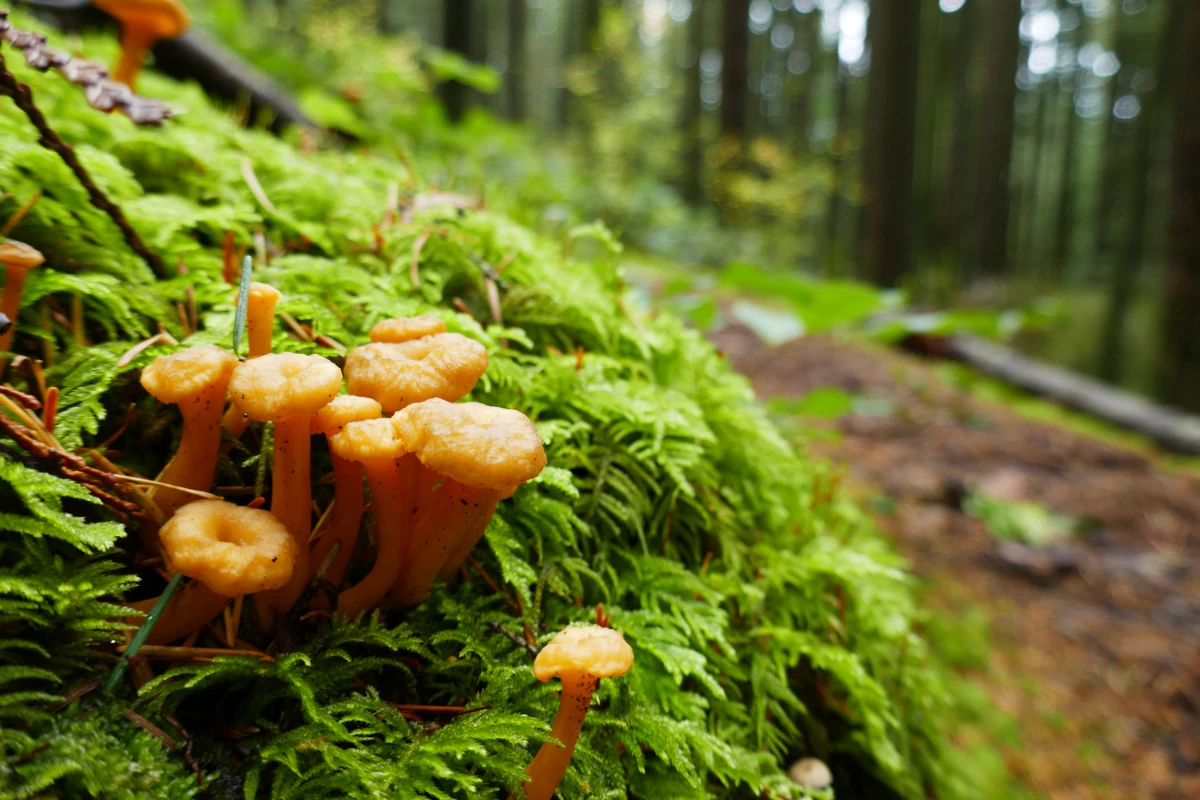
I wandered off-trail to check on my patch mid-autumn, and happily found it undiscovered by other foragers. Despite my earlier harvest, there wasn’t a sign that anyone had been through. Gold caps pressed up through the moss, bright yellow against bright green. There’s something fairytale-like about mushrooms, their presence brightening the gloom of the fall forest. Along the trail, the Winter Chanterelles have begun to come up, but they’re not big enough to pick yet.
Other locals shared complaints about foragers in the woods, raking the ground and leaving garbage and discarded mushrooms behind off-trail. Not all people are bad, though, and some are just careless and have yet to learn. My favourite kinds of people are the silent helpers, the ones who thanklessly pick up garbage and tidy the trail of fallen branches and loose rocks as they go. I see you and your quiet work. They are the ones who try to tread lightly on the land and take care of it. After all, isn’t that what you do for things you love?
Recommended Foraging Guides and Tool Kit
To find a good mushroom foraging guide, I borrowed absolutely every mushroom identification book from the library and quickly landed on a couple of favourites. Both of them are pocket-sized and can easily fit in your pack.
All That the Rain Promises and More by David Arora is highly recommended in foraging circles, and it doesn’t disappoint. It’s easy to read and packed with knowledge.
Mushrooms of the Northwest by Teresa Marrone and Drew Parker has excellent photographs, is colour-coded, well-organized, and lists potential look-alikes.
Pacific Northwest Medicinal Plants by Scott Kloos is an awesome book. I came across it at a summer market and immediately fell in love with it. Though not a mushroom guide, it has several species of fungi that can be harvested and used for medicinal purposes.
While any old sharp knife will do for harvesting wild mushrooms, it’s very handy to have a brush to remove dirt so that you don’t have to wash them (mushrooms absorb moisture) or get your foraging bag dirty.
You might be like me and sew or knit a foraging bag, but if you’re not the crafty sort, you can purchase one. Experienced foragers recommend using a mesh bag to allow spores to fall from harvested mushrooms as you walk.
Are you a huge book lover like me? Check out my list of must-read West Coast books.