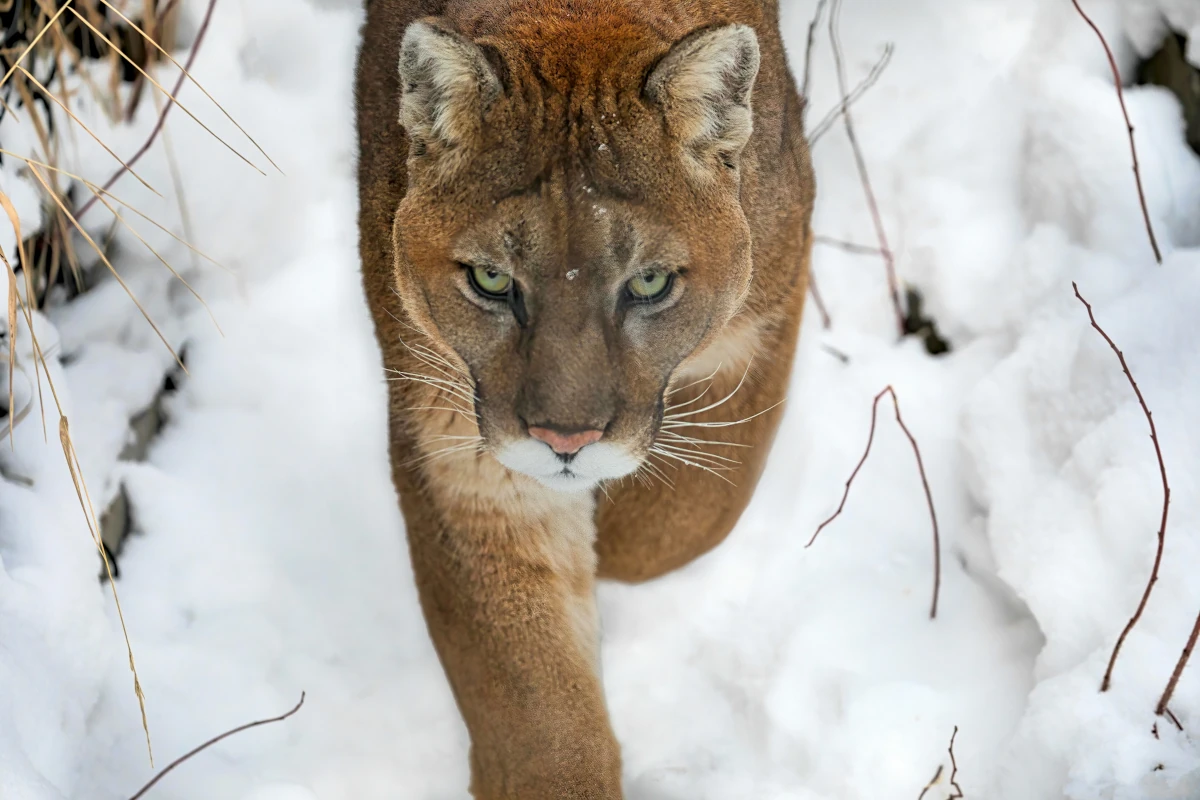
What It’s Like to Encounter a Cougar on the Trail
As the cougar and I saw each other, I was suddenly very aware that I was deer-sized.
It was on the shoreline below me, an embankment separating us. Typically, in wildlife encounters, an animal will run away from humans at first sight, but not this cougar. Instead, it casually strode towards me.
In doing so, it slipped out of view below the embankment. At that point, I very nearly wet myself. I couldn’t see it anymore, so I had no idea where it was or what its intentions were.
The encounter occurred at Nanoose Bay’s Moorecroft Park, back when it had just been acquired from a former youth camp. I’d gone to have a look at the old buildings before they tore them all down. The main trail goes out to a point, and the encounter occurred down a side trail that ran along the shore from there, an area which is now fenced off.
Running into a cougar ranked near the top of my fears list, and seeing one in a park was unexpected, given how much time I’d spent in remote wilderness. While it was my first time seeing a cougar, it was not my first time being around one.
Cougar Behaviour: An Elusive Cat
Cougars are around, even if you don’t see them. One of our kayak base camps during my guiding days had a cougar in the area. It had been sighted at least once a season, either by guests or guides. Sometimes I had the feeling of being watched. One time, while on a hike near camp, I stumbled across a den site. It had part of a kill out front, which was an alarming thing to come across, because I had kids with me at the time.
Children make up a disproportionate number of those attacked by cougars. That said, attacks on humans are uncommon. Most of the time, cougars prefer to avoid us, being shy and solitary animals. The animals typically involved in attacks are young and inexperienced, or old and disabled, or sick in some way.
That being said, if you’re an outdoorsperson, encountering a cougar is something you should prepare for, just in case.
What to Do If You Encounter a Cougar
Cougars are all muscle, designed for brute strength. I once had the chance to attend a necropsy of a young cougar, and even one so small and emaciated was impressively built. The cougar I encountered in Nanoose Bay was probably triple the size, so big that I had serious doubts about whether my measly pocketknife would even penetrate the hide.
Luckily, though, things didn’t get that far. I was well-versed in knowing what to do should you encounter a cougar, having given hundreds of safety talks on the subject during my years as a kayak guide:
- Make yourself big.
- Be loud and aggressive.
- Don’t run.
- Back away slowly.
- Fight back if attacked.
The goal is to make yourself an inconvenient meal, so the cougar will decide you’re not worth the trouble. Avoid running because it will sometimes trigger the instinct to chase and attack.
This is exactly what I did during my own encounter. I raised my arms overhead, shouted, and backed away slowly. Of course, by then the cougar was out of view, so I had no idea whether it would make another appearance somewhere.
I didn’t see it again. It was one of those encounters where I just happened across a cougar that was going about its business. Threatening behaviours include following, stalking, and approaching you, in which case, the gear you’re carrying can be a deterrent.
Cougar Safety Gear
There’s been at least one instance of someone scaring off a cougar by playing Metallica music, which is the only time I can condone playing music out loud in nature. Most of the time, the same things you might carry in your hiking kit for bear encounters can also be used to deter cougars:
- Bear spray
- Air horn
You can also carry a hiking pole to help make yourself look big or act aggressively.
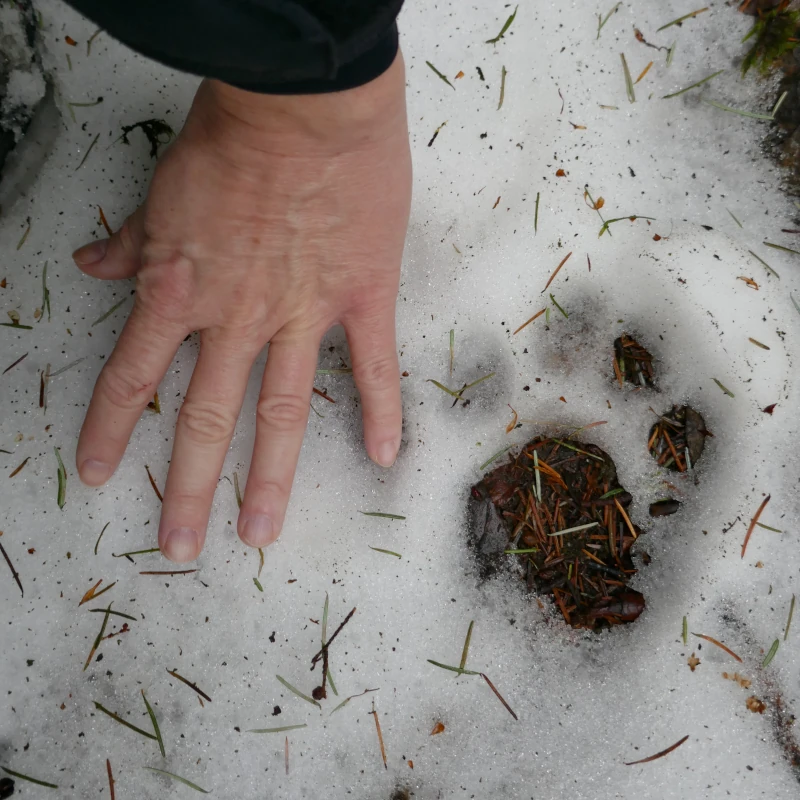
Some sources recommend carrying a fixed-blade knife of at least 6 inches in length for defence against cougars. Realistically, though, this would only be useful in an attack. Carry it if you want, but luckily, you probably won’t need it. Cougars are much better than we are at following the old adage: leaving only footprints, which is the most of them you’ll likely ever see.
The gorgeous cover photo is courtesy of Robert Sachowski on Unsplash.